
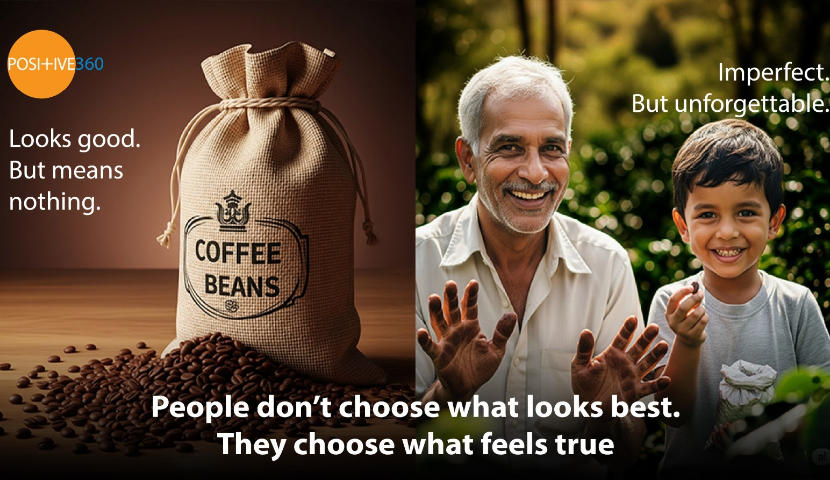
Power of brand storytelling : These are three stories—of a nervous kid with a coffee plantation, a brand expert who almost missed his biggest lesson, and a soda giant that forgot who it was.
With one truth. Branding isn’t about what you sell. It’s about the story people feel.
The Coffee Kid Who Got Schooled
Mr. Raj wasn’t your usual guest speaker. Most showed up, talked over slides, and left. But Raj didn’t do that.
He showed up early, stayed late, and took apart business ideas like a mechanic. He didn’t sugarcoat. He pressed until something cracked or clicked.
In comes Sam, looking all nervous. His pitch stumbled out like a half-remembered speech.
“We, uh… grow coffee,” he said.
Raj raised an eyebrow. “What kind?”
“I’m not sure. My dad handles that.”
Yikes. “What do you do then? What’s your business idea?” asked Raj
“He wants to expand… I think?”
Silence. Everyone felt it.
Raj sighed. Not the annoyed kind, the tired one. The kind that says, This kid has no clue what he’s doing.
“I’ll come back to you,” he said.
Sam shrank. You could almost hear his confidence deflate. But Raj had moved on.
What he didn’t know was that at that moment, he had just planted a seed.
The Call Raj Didn’t Expect
Months passed. Raj was thinking of retiring. His phone rang.
“Are you Mr. Raj?” the voice asked.
“Yes… Who’s this?”
“I’m Michel. Sam’s father.”
“Who? Who, Sam?” Raj tried to recollect.
“Sam. My son. The one with the coffee plantation who attended your class.” Michel said.
Raj froze as recollection dawned. Oh no.
Was this about that day? Was the dad mad?
“I want to meet you,” Michel continued.
Raj panicked a little.
“Okay, where?” Raj asked.
“You tell me” Michel countered.
“12 noon. Cafe Coffee Day, MG Road.” Raj said. “Okay,” said Michel and cut the call.
Raj had picked a public café, just in case.
At 12:05 PM, Michel and Sam walked in. Raj braced for it. But Michel looked him straight in the eye and said:
“Can you help us build our brand?”
Raj blinked. “Sorry… what?”
“We want to hire you.” This wasn’t a confrontation. It was a job offer.
Michel explained, “When Sam came home, he was upset. But then he started asking questions. Your feedback hurt, but it helped.”
Sam nodded. “You made me realize I didn’t even know what I was selling. I went home, talked to my dad, and learned everything. The beans, the land, the story.”
Michel smiled. “We don’t want someone who flatters. We want someone who pushes.”
That’s when it hit Raj. His reputation of being blunt and no-nonsense was working. Even when it felt like failure, his brand was doing its job.
That’s the thing with branding.
It’s not just what you say; it’s what sticks after you leave the room.
When Coke Forgot Who It Was
Let’s rewind to 1985. Atlanta.
Coca-Cola was losing ground. Pepsi’s “taste tests” were working. People liked the sweeter drink.
Coke panicked. They changed the formula..
After 99 years, they rolled out “New Coke.” It was sweeter. Supposedly better. They thought people would cheer.
Instead, America flipped out.
“I want my Coke back!” became a battle cry echoing across America.
People protested. They boycotted. They stockpiled old Coke like it was treasure.
Why?
Because Coke wasn’t just a drink. It was memories. It was family. It was pride in a bottle.
By changing the taste, Coke messed with people’s emotions. It felt like erasing history.
That’s the moment they understood: people don’t buy products. They buy how products make them feel.
After 79 days, Coke gave in. They brought back the original recipe as “Coca-Cola Classic.”
Sales didn’t just bounce back; they soared.
Why?
Because Coke did something rare for a giant brand: they admitted they were wrong. They listened. They acted like people.
And in that moment, they became more than a drink again. They became human.
That vulnerability? That honesty? It connected.
And connection is everything.
When Raj started working with Sam’s family, he discovered something bigger than a coffee business.
This wasn’t just farming. It was a story three generations deep. It was a grandfather planting trees, a father keeping the land alive, and a son finding his place.
There was a tradition in every bean. Pride in every sack. And a beautiful, untold story waiting to be shared.
Same with Coke. It wasn’t just about taste. It was about being part of people’s lives.
The magic? It wasn’t in the beans or the formula. It was in the story.
Why Do These Stories Matter to You?
Every business has a story. Even if you haven’t told it yet. The question is, WILL YOU?
Sam almost let his become just another coffee shop. Coke almost lost their to a focus group. Here’s what they both learned:
Your brand isn’t what you say. It’s what people feel when they think of you.
Raj’s tough love worked because it made people better. Sam’s coffee became special because it carried history. Coke survived because people “felt” something when they drank it.
So before you change your logo or run another ad, stop and ask:
- What’s my real story?
- Why did I start?
- What keeps me going?
- What would the world lose if I closed tomorrow?
And most of all: What do people feel when they think of me?
Forget features. Focus on feelings.
You’re already writing your brand story every time you reply to a customer, ship a product, or make a choice.
The question is, are you shaping that story or letting it write itself?
Sam learned this through a tough class. Coke learned it with a billion-dollar mistake.
How do you want to learn it?
Because branding isn’t a logo. Or a tagline. Or a campaign.
It’s a story with consequences.
Connection or disconnection. Loyalty or loss. A customer once, or a customer for life.
So, are you holding the pen? Go write something worth reading.